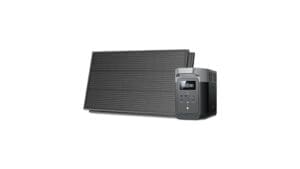
The Go 300 is a compact, safety‑focused 288Wh LiFePO4 power station that’s great if you need reliable power for laptops, phones, and small gear. You’ll get a 300W AC inverter, dual 140W USB‑C PD ports, and seven total outputs in a travel‑ready package. It won’t run kettles or most CPAPs, and startup surges can trip the inverter, but charging options are flexible (wall, car, solar). Keep going to see detailed runtimes, charging behavior, and alternatives.
Some Key Takeaways
- 288Wh LiFePO4 battery provides long cycle life and reliable energy for small devices and short outings.
- 300W AC inverter powers laptops and small appliances but cannot run kettles, hair dryers, or most CPAPs.
- Dual USB‑C PD 3.1 ports deliver up to 140W simultaneously, enabling fast laptop and device charging.
- Recharge via wall, car, or solar; wall charging is fastest, solar/car speeds depend on conditions and adapters.
- Compact, durable design with thermal management, safety certifications, and app support for convenient portable use.
Quick Verdict and Core Specs: Battery, Output, Ports, and Weight
For a compact, lightweight unit, the Gendome Go 300 punches above its class: it packs a 288Wh LiFePO4 battery with a 300W AC output and seven total ports—including dual USB‑C PD 3.1 ports that can deliver 140W simultaneously—so you can reliably run laptops, routers, and charge multiple devices on the go. You’ll appreciate the compact design and aesthetic finish that make it feel like part of your kit. Setup supports rapid deployment, and the user interface is clean and approachable via the app. You’ll still want to weigh runtimes against your needs before committing. Portable power stations are a popular option for backup charging when you need reliable, high-capacity power on the move.
Real-World Power and Runtime Tests: What 300W and 288Wh Actually Run
Typically, you’ll find the Go 300 handles everyday loads better than its compact footprint suggests: its 288Wh LiFePO4 pack and 300W AC inverter will run a laptop (30–70W) for roughly 4–8 hours, keep a Wi‑Fi router (10–20W) going for 12–24 hours, and charge smartphones multiple times, but it won’t sustain high‑draw appliances like kettles, hair dryers, or most CPAPs that exceed 300W. In real world tests you’ll see runtimes reflect device drain patterns: steady low draws maximize hours, intermittent high draws shorten them. Watch for appliance startup draw spikes; they can trip the inverter despite average loads being acceptable. For those choosing a unit for emergencies, consider overall ecosystem compatibility and after‑sales support from retailers selling portable power products.
Charging Performance and Recharge Options: USB‑C, Solar, and Car Charging Speed
Compare charging methods quickly: the Go 300 gives you flexible recharge options—fast USB‑C PD, solar input, and car charging—but each has tradeoffs in speed and practicality. You’ll like dual USB‑C PD for quick top‑ups; two ports can supply high power, though USB‑C throttling can kick in under sustained draws or thermal limits, so expect variable rates. Solar works well off‑grid if you manage Solar panel‑angle and sunlight; real‑world watts vary and rarely match wall charging. Car charging adds convenience with decent pace, but check Car adapter‑compatibility and vehicle output. Know the Fast rechargelimits to plan realistic charge times. Consider the battery chemistry and lifecycle when evaluating long‑term value for portable power with the Go 300 and other units like lithium generators battery chemistry.
Durability, Safety, and Expected Lifespan of the LiFePO4 Pack
Because the Go 300 uses a LiFePO4 pack, you get a robust chemistry that keeps performance stable and safe over long service life. You’ll appreciate strong cycle stability—LiFePO4 endures many more charge cycles than typical lithium cells, supporting up to a decade of use if cared for. Thermal management is solid: the pack resists overheating during fast USB‑C or solar charging, reducing degradation. Impact resistance and drop-resistant construction protect the module in travel and outdoor use. Verified safety certifications (UN, UL) add confidence. You can expect predictable aging, fewer surprises, and dependable daily performance. For users pairing portable power with generators, choosing the right oil for maintenance helps ensure reliable backup and generator longevity.
Who Should Buy the Go 300 and Which Alternatives to Consider
Having covered durability and lifespan, let’s look at who benefits most from the Go 300 and when you might want alternatives. You’ll like the Go 300 if you’re an outdoor photographer needing reliable, light gear to power cameras, laptops, and lights briefly — its 288Wh LiFePO4 and fast dual 140W USB‑C ports help. RV owners who want a compact backup for small appliances and devices will appreciate portability and safety certifications. If you need longer runtimes, higher AC wattage, or expandable capacity for extended off‑grid life, consider larger stations or modular systems instead of this compact unit. This gear pairs well with portable solar generators for recharging in the field.
Some Questions Answered
Does the Go 300 Support Pass-Through Charging While Powering Devices?
Yes — you can use pass through capabilities: the Go 300 supports charging while it powers devices. You’ll get practical convenience, but don’t assume perfect charging efficiency under heavy simultaneous loads; peak 140W USB-C outputs share capacity and the 300W AC limit can reduce net input benefit. You’ll feel included in a community of users who value dependable, smart features, just monitor loads via the app to optimize charging efficiency.
Can I Charge Multiple High-Watt Devices Simultaneously Without Derating?
No — you can’t run multiple high-watt devices simultaneously without derating because the 300W AC limit constrains total output. You’ll need to practice load balancing and prioritize devices to avoid overloads that harm Battery longevity. Use the dual 140W USB‑C for heavy single loads, shift noncritical loads to solar or car charging, and monitor via the app so you’ll stay within safe limits and keep the battery healthy.
Is the Go 300 Compatible With Third-Party Solar Panels and MPPT Controllers?
Yes — you can use third-party panels, and the Go 300 shows solid solar compatibility when you match voltage and connectors. You’ll want panels within the unit’s input range and a compatible MPPT controller; controller interoperability depends on wiring and communication protocols. Don’t assume every controller will handshake perfectly — verify open-circuit voltage, connector type, and MPPT settings. That way you’ll confidently expand your setup and feel supported in the community.
What Firmware Updates or Customer Support Options Are Available?
You get regular firmware updates via the GENDOME app and OTA prompts; they improve charging behavior, USB-C PD handling, and safety features. For support channels, you’ll find in-app chat, email, phone, and online resources (manuals, FAQs). Be critical: updates can be infrequent, so you should check the app regularly. You’ll feel included by responsive agents and community forums that share tips and troubleshooting steps.
Are Spare Batteries or Expansion Packs Available for Increased Capacity?
No—there aren’t official spare battery modules or expansion bays for adding capacity to the Go 300. You’ll need to rely on its built-in 288Wh LiFePO4 pack. That limits upgrade paths, so if you want more runtime you’ll either buy a larger model or run external solutions that aren’t officially supported. You’ll feel more secure choosing a system with modular battery modules or expansion bays if scalability and long-term flexibility matter to you.