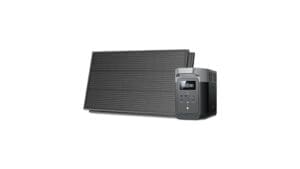
You’ll find the SOLIX C300 gives predictable, quiet power for laptops, phones and small appliances with its 288Wh LiFePO4 pack and 300W continuous output. It charges fast via 140W two‑way USB‑C and wall power, supports 60–100W solar, and lasts around 3,000 cycles so you’ll replace it far less often. Ports are practical though heavy USB‑C loads limit AC headroom. It’s a smart choice for compact, dependable backup—keep going to see full test numbers and comparisons.
Some Key Takeaways
- 288Wh LiFePO4 battery offers reliable, long-lasting power for small appliances, phones, and laptops with predictable runtime.
- 300W continuous (600W surge) AC output supports typical portable loads but isn’t for sustained heavy-draw appliances.
- Two-way USB-C up to 140W and wall charging recover ~80% in ~50 minutes for fast recharges.
- Durable LiFePO4 chemistry, smart thermal control, and ~3,000-cycle life improve safety and long-term value.
- Best for compact trips and daily backup; consider larger SOLIX, EcoFlow DELTA, or Jackery if you need more capacity or sustained power.
How the SOLIX C300 Performs: Real‑World Power and Runtime
Push the C300 into everyday use and you’ll quickly see where its 288Wh LiFePO4 pack and 300W continuous output shine: it reliably runs small appliances and charges laptops or phones with the sort of predictable performance you want on trips or during outages. You’ll notice steady runtimes that outlast typical lithium packs, and the 3,000-cycle chemistry limits battery ageing concerns. Compared with rivals, the C300 balances weight, noise, and output without frequent thermal throttling under moderate loads. You’ll appreciate predictable decline over years, clear load limits, and confidence that it won’t surprise your group when you need power. For buyers comparing options, consider how the C300 fits typical portable power and backup generator needs with its combination of capacity, output, and lifecycle performance characteristics.
Charging Options and Speed: Wall, USB‑C, Solar, and Car Tested
Getting the C300 back to full is fast and flexible: its two-way USB-C supports up to 140W for quick top-ups, wall charging grabs roughly 80% in about 50 minutes, and you can also recharge from a car or from Anker 60W–100W solar panels (100W recommended). You’ll appreciate how USB-C cuts downtime compared with slow trickle sources, though panel placement matters for consistent solar gains. Car charging is practical on road trips but slower than wall or USB-C. If you value community-style gear sharing, the C300’s varied inputs let you adapt — fast trickle for overnight, 100W solar for daytime, and rapid USB-C recovery. Many users pair it with lightweight portable solar panels for true off-grid flexibility.
Ports, Outputs, and Device Compatibility (140W USB‑C, AC, Car, USB‑A)
While the SOLIX C300 keeps a compact footprint, its port layout punches above its class: three AC outlets share a 300W continuous (600W surge) envelope for mains gear, a 120W car socket handles 12V accessories, and the USB suite centers on two high‑power 140W USB‑C ports plus a 15W USB‑C and a 12W USB‑A for smaller devices. You’ll appreciate clear port prioritization when multiple devices compete: heavy USB‑C loads take precedence, AC outlets split the remaining headroom. Compared to peers, cable management feels thoughtful but isn’t perfect; plan adapters and a short cable kit to keep your setup tidy. This model is well suited for users who rely on portable power and multi‑device charging scenarios.
Durability, Safety, and Long‑Term Value (LiFePO4, 3,000 Cycles, Warranty)
Beyond ports and power distribution, you’ll want to know how the SOLIX C300 holds up over time and under real-world stresses. You’ll appreciate LiFePO4 battery chemistry here: it gives safer thermal behavior and far longer cycle life than typical NMC packs. With around 3,000 cycles before notable capacity loss, the C300 ranks well among compact stations, so you won’t replace it frequently. Safety features like smart temperature control and impact resistance reduce failure risk in varied conditions. Combine that durability with a five-year warranty length and it becomes a practical, community-minded investment for shared adventures and daily backup. For those seeking portable or backup power solutions, this model fits well within a lineup of products focused on lithium battery generators and reliable portable power.
Who Should Buy the C300 and Alternatives to Consider
If you need a compact, safe power station that handles daily essentials and short off-grid trips without frequent replacement, the C300 is a strong pick because its 288Wh LiFePO4 pack, 300W output, and 3,000-cycle lifespan balance longevity, portability, and power. You should buy it if you value quiet, reliable backup for phones, laptops, cameras, and small appliances—ideal for budget travelers and offgrid photographers who want dependable recharge and fast USB-C. If you need higher capacity or sustained heavy loads, consider larger SOLIX models, EcoFlow DELTA series, or Jackery units; compare weight, recharge speed, and AC power. Many users pair a portable powerstation with backup generators or solar panels for extended off-grid use.
Some Questions Answered
Can the SOLIX C300 Power Medical Devices Like CPAP Machines Overnight?
Yes — you can run many CPAP machines on the SOLIX C300, but check CPAP compatibility and your model’s power draw. With 288Wh and 300W continuous output, it’ll handle typical CPAPs (including travel units) for several hours; full-night Overnight runtime depends on settings (pressure, humidifier) and whether you use a battery-backed or heated hose. Compare your CPAP’s wattage to the C300 specs to estimate run time and join others testing similarly.
Is the Unit Compatible With International Voltages and Plug Adapters?
Yes — you can use the unit internationally, but you’ll need appropriate plug adapters for local sockets. The SOLIX C300 supports standard AC output compatible with many countries’ devices, offering international compatibility in voltage handling for typical consumer gear. Compare travel setups: you’ll avoid transformers for devices within its 300W limit, yet you’ll want proper plug adapters and check local voltage norms to secure safe, shared use with others.
Can I Take the C300 on an Airplane as Carry‑On or Checked Luggage?
Yes — you can usually bring the C300 as carry-on, not checked, because airline restrictions and battery regulations favor passenger cabin carriage for lithium batteries. You’ll compare watt‑hours: 288Wh exceeds many airlines’ 100Wh limit but sits below some 300Wh caps; still get airline approval before flying. You’ll feel included by confirming policies with carriers, documenting specs, and keeping the unit powered off and accessible during security checks.
Does the Power Station Have an App or Bluetooth Monitoring Feature?
No — it doesn’t offer Bluetooth control or a dedicated mobile app. You’ll monitor the C300 using its onboard display and buttons, which gives clear real-time stats but lacks remote convenience. Compared to some competitors with app-based monitoring and Bluetooth control, this model focuses on rugged, straightforward use and longer battery life. If you want remote status or smart integration, you’ll feel the absence; many community users prefer app-enabled units.
Are Replacement Batteries or Service Centers Available Locally?
Yes — you can get support locally through Anker-authorized service centers and designated repair partners; contact Anker for the nearest locations. If you need a replacement battery, they’ll advise on options and official service pathways rather than DIY swaps. They’ll also guide battery recycling to keep things responsible. Compared to generic sellers, authorized centers give warranty-backed repairs and clearer end-of-life recycling steps, helping you stay safe and included.