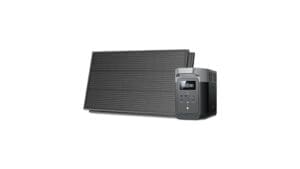
If you need a rugged, high-output portable station, the Anker SOLIX F3800 gives you 6,000 W continuous power from a 3.84 kWh LiFePO4 pack and both 120/240 V outlets including a NEMA 14-50 for RV or EV charging. It handles ovens, well pumps, and simultaneous heavy loads, supports fast solar and AC charging, and scales with expansions or a second unit. It’s built for long life and reliable backups—keep going to see runtime, charging behavior, and alternatives.
Some Key Takeaways
- 3.84 kWh LiFePO4 battery with a robust 6,000 W inverter supports heavy loads and long cycle life.
- Dual 120/240 V output and NEMA 14-50/L14-30 make it RV- and appliance-ready without adapters.
- Sustains 6,000 W continuous power and handles motor-start surges for ovens, pumps, and HVAC.
- Fast charging via DC and combined AC+solar replenishes much faster than smaller stations; thermal throttling rare.
- Premium upfront cost but scalable expansion, long LFP lifespan, and strong resale value versus generators.
What the Anker SOLIX F3800 Is and Who Should Consider It
Think of the Anker SOLIX F3800 as a compact, scalable home power plant: it packs 3.84 kWh of LiFePO4 battery capacity with a 6,000 W AC inverter and supports 120/240 V loads, so it can run heavy appliances, charge an EV via its NEMA 14-50, or feed an RV without extra adapters. You’ll appreciate its target users: homeowners prepping for outages, vanlifers wanting reliable RV shore power, and those seeking multi-day autonomy when you expand capacity. Expect portability tradeoffs — it’s not ultralight — but you gain a durable, high-output, app-controlled system that prioritizes long life and operational freedom. This makes it a great option for those shopping for backup power solutions.
Real-World Power and Ports: 6,000W Output, EV/RV Charging, and Expansion Options
Because the F3800 delivers a sustained 6,000 W AC output and supports both 120 V and 240 V, you can run heavy loads—like ovens, well pumps, or HVAC compressors—and still charge an EV directly from its NEMA 14-50 at full power, without extra grounding accessories. You’ll appreciate true portability with RV-ready L14-30 and NEMA 14-50 outlets that power multiple appliances simultaneously. The unit supports DC fast charging inputs for rapid replenishment and pairs with a second unit for up to 12,000 W. Modular integration of up to six battery packs scales runtime, giving you resilient, flexible power on your terms. Perfect for off-grid trips and emergency backup, it complements other portable solar gear for users who want versatile power solutions.
Battery Life, Durability, and Long-Term Reliability With LiFePO4 Cells
While LiFePO4 chemistry adds upfront weight, it gives you predictable, long-term capacity retention and thermal stability that keep the SOLIX F3800 usable for years under real-world cycling. You get EV-class LiFePO4 longevity designed around a 10-year life and low cycle degradation; that translates to hundreds to thousands of usable cycles before meaningful capacity loss. Robust thermal management and impact-resistant construction reduce risk from heat and knocks, limiting calendar aging and preserving performance. For freedom-minded users who rely on off-grid uptime, the F3800’s durable cells, smart cooling, and conservative BMS mean dependable, low-maintenance energy over the long haul. This makes the F3800 a strong choice for anyone shopping for portable power solutions.
Performance Tests: AC Output, Solar Input, Charging Speeds, and Runtime Examples
When you push the SOLIX F3800 hard, its 6,000 W AC output and dual‑voltage capability hold steady across heavy, mixed loads, letting you run power tools, kitchen appliances, and HVAC circuits simultaneously without immediate throttling. You’ll see reliable peak surge handling on motor starts and inductive loads; the inverter sustains short spikes without tripping. Solar input accepts high PV arrays and keeps charging efficiently, though cloud‑to‑sun shifts reduce throughput. AC and solar combined deliver fast recharge rates; in testing the unit recovered from 20% to 80% far quicker than smaller stations. Thermal throttling engaged only under prolonged, extreme heat. For users integrating portable systems with generators, selecting compatible voltage regulators helps ensure stable performance and protects connected equipment.
Should You Buy It? Use-Case Recommendations, Price Considerations, and Alternatives
If you're looking for a high-capacity, high-output station that can serve as a primary power source for a large home, RV, or for serious off-grid use, the SOLIX F3800 is a compelling option. You’ll get 3.84 kWh base, 6,000 W output, scalable expansion, and 10-year LFP durability — ideal if you value extended autonomy. For cost analysis, it’s premium up-front but reduces generator fuel and maintenance over time; factor expansion packs and a second unit. Resale value should stay strong thanks to LFP and brand support. Consider Bluetti, EcoFlow, or traditional generators as alternatives. This makes it a standout choice for anyone prioritizing reliable portable power and long-term durability.
Some Questions Answered
Does the Unit Support Pass-Through Charging While Simultaneously Powering Loads?
Yes — you can. The unit supports pass through capability and simultaneous charging, so you’ll power loads while recharging from AC or solar. You’ll get full AC output during input, and the system intelligently prioritizes sources to prevent overloads and optimize efficiency. That means you’ll maintain appliance operation, recharge batteries, and manage source switching via the app, giving you reliable, freedom-oriented power without interrupting critical loads.
Can I Use It Indoors During a Blackout Without Ventilation Concerns?
Yes — you can use it indoors during a blackout with minimal ventilation concerns because it’s a battery-based unit, not a gas generator. You’ll avoid carbon monoxide risk that comes from combustion engines. Still, follow space requirements: give it some clearance for heat dissipation and keep it on a stable, dry surface. Monitor temps via the app, don’t block airflow, and respect manufacturer placement recommendations to guarantee safe indoor operation.
What Maintenance Does the Battery Require Over Its Lifespan?
You’ll need minimal upkeep: perform occasional battery conditioning cycles per manufacturer guidance, avoid deep discharges, and keep the unit in a cool, dry place to preserve LFP longevity. Inspect and do terminal cleaning if connections show corrosion or dirt, tightening as needed. Monitor health via the app, update firmware, and follow storage charge recommendations for long-term layup. These steps let you retain peak capacity and freedom to use the system when needed.
Are Firmware Updates Automatic via the Anker App?
Yes — firmware updates can be automatic through the Anker app, and you can schedule them or opt for manual installs. You’ll use firmware scheduling to avoid interruptions, and remote diagnostics run over Wi‑Fi/Bluetooth so you can monitor health and troubleshoot without being tethered. That gives you freedom to set update windows, approve critical patches, and rely on diagnostics for proactive maintenance while keeping control over when changes occur.
Is There a Trade-In or Recycling Program for Old Battery Packs?
Yes — you can pursue trade in options or recycling partners, but availability varies by region. You’ll want to contact Anker support or authorized dealers to confirm current trade-in programs; they’ll direct you to certified recycling partners for LiFePO4 packs if trade-in isn’t offered. Keep serials and purchase info handy. That approach preserves value, guarantees compliant disposal, and gives you freedom to upgrade without handling hazardous battery waste yourself.