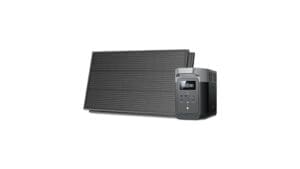
You’ll get a compact 499 Wh LiFePO4 power station that charges fast and lasts longer than typical NMC units. It hits full on X‑Stream AC in about an hour, accepts up to 220 W solar for rapid top‑ups, and delivers up to 1,000 W peak with multiple ports for phones, laptops, CPAPs, and small appliances. The BMS enforces safe charging and cell balancing, reducing degradation. Keep going to see real-world runtimes, limits, and alternatives.
Some Key Takeaways
- 499 Wh LiFePO4 battery offers long cycle life and thermal stability for reliable daily and backup use.
- X-Stream AC charging refills the unit in about an hour for fast turnaround between uses.
- Up to 220 W solar input (about 2.3 hours ideal) enables quick off-grid recharging with MC4-compatible panels.
- 1000 W peak output and mixed ports (AC, USB-C PD, USB-A, 12V) run essentials like laptops, CPAPs, and mini-fridges.
- Limitations include 1000 W peak for heavy appliances and reduced runtime for multi-day off-grid without extra batteries.
Performance Snapshot: Real Charging Times, Output Limits, and Runtime Estimates
Start by noting that the River 2 Max charges rapidly and delivers predictable output: using EF ECOFLOW’s X-Stream AC fast charging you can top the 499 Wh LiFePO4 pack in about an hour, while a 220 W solar array can refill it in as little as 2.3 hours. You’ll see real world recharge figures match specs under good conditions. With up to 1000 W peak output and multiple ports, you can run essentials without micromanaging loads. Expect peak load throttling when sustained draws near limits; plan device sequencing to avoid interruptions. Portability and clear charge windows give you practical off-grid freedom. It's a great choice for those who need reliable backup and portable power for outdoor or emergency use.
Battery Tech and Longevity: What LiFePO4 and the Advanced BMS Mean in Practice
Having covered charging behavior and output limits, let’s look at what’s under the hood: the River 2 Max uses LiFePO4 (LFP) cells that give you longer cycle life, greater thermal stability, and better calendar lifespan than typical NMC packs—EF ECOFLOW rates the battery for over a decade of use under normal conditions. You’ll see slower battery degradation thanks to LFP chemistry and an advanced BMS that actively monitors voltage, current, and temperature. That BMS enforces cell balancing, safe charge windows, and thermal management to protect capacity. For mobile freedom—camping or backup—you get predictable longevity and lower long-term replacement risk. Essential maintenance kits for reliable power help prolong that lifespan by keeping connectors, filters, and contacts clean.
Charging Options Explained: 1-Hour AC, 220W Solar Fast Charge, and Included Cables
While the River 2 Max is compact, it gives you unusually fast and flexible recharging: X-Stream AC charging brings the unit to full in about an hour, and if you’re off-grid you can push up to 220 W of solar input to top the battery in roughly 2.3 hours under ideal sun. You’ll appreciate the practical mix: one-hour AC for rapid turnaround, 220W solar for true solar portability, and simultaneous inputs when conditions allow. EcoFlow includes the AC charging cable so you won’t hunt for adapters; cable compatibility with common MC4 solar leads keeps setup simple and reliable. It's a strong choice for people who need reliable portable power and accessories for portable generators. With ef ecoflow portable power stations, you can easily expand your energy options wherever you go. Whether you're camping, tailgating, or experiencing a power outage at home, these stations provide reliable energy on demand. Their versatile nature and user-friendly design make them an essential tool for anyone looking to harness the power of the outdoors or ensure uninterrupted access to electricity.
Ports, Power Delivery, and What It Can Run (11 Essentials Tested)
Beyond recharge options, what matters next is how you'll actually use the power on the River 2 Max. You get a compact layout: AC outlets, USB-C, USB-A, and a car-style 12V port. USB throughput is solid for fast charging phones, tablets, and laptops via USB-C PD. The 499 Wh capacity and 1000 W surge let you run up to 11 essentials tested—lights, mini-fridge, CPAP, laptop, fan, camera gear—with clear Appliance compatibility limits for motors and heaters. The BMS manages output safely, and port variety gives freedom to mix devices without adapters or risk of overloading the unit. This makes the River 2 Max a practical option for users needing portable power for backup charging and small outings.
Who Should Buy the River 2 Max 500 : Best Use Cases, Limitations, and Alternatives
If you need a lightweight, fast-recharging power station that handles everyday devices and short-term backup tasks, the River 2 Max 500 is a strong fit. You’ll appreciate 499 Wh LiFePO4 longevity, 1-hour AC X-Stream charging, and 220W solar support for quick top-ups on the road. Best use cases: camping essentials, weekend RV trips, mobile work, and targeted emergency preparedness for power outages. Limitations: 1000 W peak still restricts heavy appliances and longer multi-day off-grid power without extra batteries. Alternatives include larger EcoFlow options or rival 1–2 kWh units if you need extended runtime or higher continuous output. For those using portable or backup generators, pairing the River 2 Max 500 with compatible solar panels can extend runtime and improve recharge flexibility.
Some Questions Answered
Does It Support Pass-Through Charging While Powering Devices?
Yes — you can use simultaneous charging while running devices. You’ll get pass-through capability that lets the unit accept input and power loads at the same time, though inverter efficiency slightly reduces usable output during heavy draw. You’ll still benefit from X-Stream fast charging and solar options, but expect some thermal and conversion losses. You’ll want to monitor loads so you don’t exceed the 1000 W output or stress the battery.
Can It Be Stored Safely Long-Term Without Maintenance?
Yes — you can store it long-term, but you shouldn’t leave it unattended. You’ll preserve battery health by setting a cool, dry storage environment and keeping state of charge around 40–60% to limit self discharge effects. Plan periodic cycling every 3–6 months to prevent capacity loss and let the BMS balance cells. You’ll also keep the AC cable and manuals nearby and follow the five-year support guidance if issues arise.
Are Replacement Batteries or Modules Available Separately?
No — replacement modules aren’t sold as a user-replaceable kit. You’ll need to contact support for service or a warranty replacement; they’ll handle module swaps or full battery replacement. You can request guidance on end-of-life battery recycling and disposal when arranging service. Keep proof of purchase and serial number handy, and they’ll advise eligibility, timelines, and local recycling options so you can maintain freedom to use or retire the unit responsibly.
Is It Safe to Use in Extreme Temperatures (Hot or Freezing)?
Yes — but with limits. You’ll want to avoid extreme heat or deep freeze for best performance. The LiFePO4 battery chemistry tolerates temperature swings better than other cells, yet the unit can implement thermal throttling to protect battery health, reducing charge/discharge rates in hot or cold conditions. You’ll maintain safety by keeping it shaded above freezing, not charging below recommended temps, and following the manual’s operating temperature ranges.
Does It Come With Carrier Insurance or International Warranty Coverage?
No, it doesn’t automatically include carrier insurance or blanket international warranty coverage. You can usually register the unit for warranty transfer within the original warranty period, and EcoFlow offers global coverage in many regions, but terms vary by country and seller. Check your purchase paperwork, register online promptly, and contact EcoFlow support to confirm eligibility, transfer rules, and any required proof of purchase to guarantee uninterrupted service and freedom to travel. When considering the EF ECOFLOW DELTA 3 ultra performance, it's essential to examine how it holds up against competitors in various conditions. Users have reported that its high capacity and fast charging capabilities make it ideal for off-grid adventures and emergencies alike. Ensure you familiarize yourself with its features to maximize your experience and leverage its full potential during use.