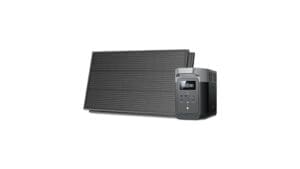
You’ll like the PGYOB R300 if you want a compact, 6.8‑lb LiFePO4 power station that’s built for camping, remote work, and outage prep. It gives 299Wh with two pure‑sine 110V AC outlets (300W continuous, 600W peak), USB‑C PD for laptops, and runtimes that handle a laptop for ~4–5 hours or a CPAP ~7–9 hours. Charging from wall, car, or the included 55W solar panel is straightforward. Keep going to see detailed runtimes, charging notes, and alternatives.
Some Key Takeaways
- 299Wh LiFePO4 power station offering ~2000 cycles for long-term camping and emergency use.
- Two 110V pure-sine AC outlets (300W continuous, 600W peak) suitable for laptops and CPAPs.
- Multiple ports include dual USB-C PD (60W and 30W), QC USB-A, and several 12V outputs for versatile device charging.
- Charging options: wall (3–5h fastest), 12V car, or included 55W solar panel (5–8h depending on sun).
- Lightweight (6.8 lb), compact design balances portability with reliable power for weekend trips and outages.
What the PGYOB R300 Is and Who It’s For
The PGYOB R300 is a compact 299Wh LiFePO4 portable power station that gives you reliable, long-lived backup power for camping, emergencies, and sensitive gear like CPAPs and laptops. You’ll appreciate its portable convenience: 6.8 pounds, small footprint, and durable LiFePO4 chemistry that promises ~2000 cycles. Evaluate it as a pragmatic choice if you want clean, pure-sine output for sensitive devices and straightforward charging options including a 55W solar panel. Target users include weekend campers, remote workers, and households prepping for outages who value longevity, safety protections, and a community of peers seeking dependable, minimalist power solutions. It’s a good fit for those prioritizing portable power solutions for backup and outdoor use.
Real-World Power: Outputs, Runtime Examples, and Device Compatibility
Having covered what the R300 is and who it’s for, let’s look at what it actually runs and for how long. You get nine outputs: two 110V AC pure-sine outlets (300W cont., 600W peak), dual USB-C PD (60W, 30W), two QC USB-A, and multiple 12V ports—so device compatibility is broad. In practice, runtime examples show a laptop (~60W) lasting ~4–5 hours, a CPAP (~30–40W) running 7–9 hours, and phone charges stretching dozens of cycles. You’ll appreciate the predictable LiFePO4 performance and clear output limits when planning group trips or emergency setups. This model is ideal for those using portable power with multi device charging needs.
Charging Options Compared: Wall, Car, and the Included 55W Solar Panel
Often you’ll pick a charging method based on speed, convenience, and where you’re using the R300, and each option has clear trade-offs: wall charging is fastest and most predictable (about 3–5 hours), the 12V car input offers decent on-the-go replenishment but depends on vehicle output and takes similar time, while the included 55W solar panel gives true off-grid freedom yet requires good sun and will typically take ~5–8 hours with a 100W equivalent—expect slower, variable rates in low light despite the panel’s smart-chip optimization. You’ll favor wall power for speed, car for travel, solar for independence. Practice good charging etiquette: position panels for prime solar placement, avoid shading, monitor connections, and rotate sources to extend trips. This site specializes in recommending the best portable power and solar gear for users seeking reliable portable solar generators.
Durability, Safety, and Expected Lifespan (LiFePO4, Protections, Cycles)
Because PGYOB built the R300 around a LiFePO4 pack, you get a power station that prioritizes thermal stability and long-term capacity retention—qualities that matter if you rely on it for camping, medical devices, or regular backup use. You’ll benefit from robust thermal management and inherent chemistry resilience: LiFePO4 tolerates heat swings better and reduces degradation. Protections for over-voltage, over-current, and over-temperature add layers of safety for sensitive gear. With roughly 2000 cycles and an expected service life beyond ten years, this feels like a community-focused choice you can trust. When it’s time, battery recycling pathways keep environmental impact in mind. Choosing the right unit involves comparing capacity, cycle life, and portable power features to match your specific needs.
Is It Worth Buying? Price, Package Value, and Alternatives to Consider
So, is the PGYOB R300 worth buying? You’ll find its LiFePO4 longevity, 299Wh capacity, and solid outputs deliver strong utility for camping and emergency use. In a price comparison, it’s competitive when the included 55W solar panel and accessories are factored in—bundle value leans positive. Consider resale potential: durable chemistry and brand support help retain value. Still, weigh competing alternatives with higher PD wattage or lighter weight if you need faster charging or ultra-portability. If you want community-tested reliability, the R300 is sensible; if peak power or minimal weight matter more, shop alternatives. It’s a practical choice for those who need reliable off-grid power and essential portable power gear for trips or outages.
Some Questions Answered
Does the R300 Support Pass-Through Charging While Powering Devices?
Yes — you can use pass through capability: the R300 supports simultaneous charging and powering devices. You’ll be able to run gear while the unit charges via AC, car, or solar, though the remaining-time display only stays accurate on AC. This is practical and dependable for group trips or emergencies, and its LiFePO4 chemistry plus protections help maintain stability during simultaneous charging, so you’ll feel confident using it continuously.
Can I Replace the Internal Lifepo4 Battery if It Degrades?
Yes — you can replace the internal battery, but it’s not meant for casual user swaps. You’ll likely need authorized service to guarantee safe LiFePO4 handling and to preserve warranty coverage. Evaluate repair vs. replacement costs: authorized battery replacement preserves safety, cycle-life claims, and warranty, while third-party swaps may void coverage. If you want belonging to a supported user community, contact PGYOB support for official options and pricing before proceeding.
Are Firmware Updates or App Connectivity Available for the R300?
No — there aren’t firmware updates or app connectivity for the R300. You’ll rely on its built-in controls and display; firmware updates and app connectivity aren’t offered, limiting remote monitoring or feature upgrades. That’s practical for straightforward use, but if you want networked management or over-the-air improvements, this model won’t provide them. You’re still supported by warranty and customer service for performance or repair questions.
What Is the Operating Temperature Range for Safe Use and Storage?
You can operate the unit safely between 14°F to 104°F (-10°C to 40°C); storage guidelines recommend -4°F to 140°F (-20°C to 60°C). These ambient limits balance battery longevity and performance, and you’ll want to avoid extremes to keep cycles high. Evaluate conditions before use, and store partially charged in moderate environments. You’re part of a community that values care—follow these limits to protect the R300 and prolong its service life.
Does the Unit Include an LED Light or SOS Signaling Feature?
No, it doesn’t include an LED beacon or SOS signaling feature. You’ll still find the unit thoughtfully designed, but the R300 focuses on reliable power outputs and safety rather than integrated emergency lighting. If you want signaling, you’ll need to add a separate LED beacon or an SOS-capable light. That choice keeps the pack lighter and more affordable, and you’ll join others who customize gear to fit specific outdoor or emergency needs.