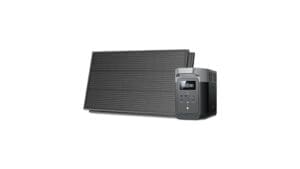
You’ll get a lightweight, 2.2 lb 120W portable power station that reliably runs phones, laptops, small fans, LED lamps, routers, and mini‑fridges on short trips, but it won’t handle heaters, coffee makers, or heavy motors. Its 97.6Wh battery gives multiple phone charges and a few hours for laptops or fridges depending on draw. It recharges fastest via USB‑C wall adapter, supports solar and car charging, and has standard safety protections—keep going to see detailed runtimes and limits.
Some Key Takeaways
- 120W AC output limits continuous device draw to light electronics; avoid motors, heaters, or high-wattage appliances.
- 97.6Wh battery gives ~12+ phone charges, ~6–8 hours for a 45W laptop, and ~3–5 hours for a mini-fridge cycling.
- Multiple recharge options: USB‑C wall adapter (fastest), car charging, solar panels, and slower standard USB top-ups.
- Built‑in BMS, thermal management, and a cooling fan protect against overloads, short circuits, and overheating.
- Ideal for camping, van life, and emergency charging; not suitable if you need sustained >120W or heavy-duty appliances.
Which Devices the 120W Portable Power Station Can Actually Run?
To get a clear sense of what this 120W portable power station can run, match your device's continuous watt draw to the station's 120W AC limit and 97.6Wh capacity. You’ll reliably power low draw appliances: LED lamps, phone chargers, small fans, and routers for short stretches. Expect laptops to run for a few hours depending on draw; avoid anything with motors or heating elements above 120W. Use the unit for emergency lighting and essential USB/C devices during outages or on the road. You're trading raw power for portability — ideal when you want freedom without bulk. This makes the unit well suited for backup power and portable power needs.
Real-World Runtime Tests: Phone, Laptop, Mini-Fridge, and Camera
We'll put the 120W power station through everyday tests to see how long it actually runs common devices: a smartphone, a laptop, a mini-fridge, and a mirrorless camera. You’ll get roughly 12+ full phone charges (5–10W draw), about 6–8 hours on a 45W laptop under light load, and roughly 3–5 hours powering a small mini-fridge cycling at ~30–40W. A mirrorless camera with intermittent charging lasts many shoots, topping multiple batteries. Results assume nominal 97.6Wh capacity and typical lithium-ion battery chemistry; expect gradual runtime degradation over months with heavy cycling. These figures favor mobility and autonomy. Portable setups pair well with solar generator accessories for recharging on the go.
Charging Options and Recharge Speed: USB‑C, Solar, Car, and Wall Adapter
You can recharge the 120W power station four main ways—USB‑C wall adapter, car (cigarette lighter), solar panel, or a standard USB port—each with different speeds and tradeoffs. You’ll get fast recharge from the included USB‑C wall adapter; it’s the quickest and most reliable for full cycles. The car adapter works on the road but is slower and depends on vehicle output. Solar offers freedom off‑grid; check solar compatibility and expect variable rates by sun and panel specs. Standard USB charging is convenient for topping up slowly. Choose the method that matches your schedule and mobility needs. For portable and backup use, consider power inverter compatibility when pairing the station with generators or other power sources.
Safety, Thermal Management, and Build Quality You Should Know
Although small, the 120W power station packs deliberate safety and thermal features that matter for real-world use: its built-in battery management system actively handles short circuits, over-current, over-voltage, overload, and overheating protections, while an automatic cooling fan engages as needed to keep temperatures in check. You get predictable thermal throttling to protect components under sustained load, and the fan noise stays modest during normal use. Evaluate chassis materials for durability—polymer blend feels light yet resilient. Check the IP rating if you plan rugged outdoor use. Overall, safety systems and cooling balance portability with reliable protection. Consider also accessories and add-ons like portable power stations that complement backup power setups.
Who Should Buy This 120W Unit : Ideal Users and Deal-Breakers
If you need a lightweight, portable backup for low-to-moderate power needs, this 120W unit is a solid choice: it’s best for camping, van life, weekend travel, or emergency phone/laptop charging where loads stay under 120W. You’ll appreciate its 2.2 lb weight, AC outlets, USB-C, and simple display if you’re one of the lightweight travelers wanting freedom from outlets. Emergency preppers will like the SOS light, car recharging, and safety protections. Don’t buy it if you need to run heaters, coffee makers, pumps, or compressors — those are deal-breakers beyond 120W capacity. It also pairs well with RV solar panels for extended off-grid use.
Some Questions Answered
Can I Fly With This 97.6wh Power Station in Carry‑On Luggage?
Yes — you can carry this 97.6Wh power station in carry-on luggage. You’ll follow airline policies and lithium restrictions: most airlines allow batteries under 100Wh in the cabin with approval. Pack it in your carry-on, protect terminals, and declare it at check‑in if asked. Don’t put it in checked baggage, and check specific carrier rules before travel to guarantee compliance and avoid surprises at the gate.
Does the Unit Support Pass‑Through Charging While Powering Devices?
Yes — the unit supports pass through capability, so you can use simultaneous charging and powering. You can recharge the 97.6Wh battery via USB‑C, car adapter, or solar while it supplies connected devices through the AC, DC, or USB ports. That keeps your gear running without interruption, though total draw must stay under the 120W AC limit. The built‑in BMS and fan manage safety and thermal performance during simultaneous charging.
Is the Battery Replaceable or Serviceable by Users?
No — you can’t replace the cells or perform field serviceability on this unit. The battery’s sealed and not designed for user replaceable cells, so attempting DIY repairs will void warranty and risks safety. If you need service, contact the manufacturer’s 12‑month support and 24/7 care for authorized repairs or battery replacement. For freedom to swap packs, consider a model advertised with user‑replaceable batteries or modular field serviceability.
What Warranty Covers Battery Degradation Over Time?
The battery warranty covers defects for 12 months, but it doesn't promise long-term capacity guarantees beyond that period. You're protected against manufacturing faults and early degradation during the 12-month warranty window, with 24/7 support to help. After that, normal capacity loss from use isn't explicitly guaranteed, so you should expect gradual decline and consider proper charging and storage to maximize lifespan if you want freedom from premature wear.
Can I Daisy‑Chain Two Units for Higher Output or Capacity?
No — you shouldn’t daisy‑chain two units for higher output unless the manufacturer explicitly supports parallel operation. Even if you try, mismatched voltage can cause current imbalance, trigger protections, or damage batteries. If you want more capacity, carry a second unit and use devices alternately or in sequence. For higher continuous output, choose a designed parallel-capable system or a single higher‑wattage station to preserve safety and freedom.