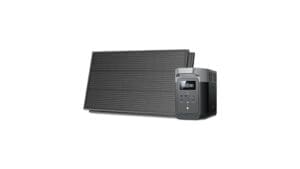
This 127W (200W peak) portable power station gives you a compact 88.8Wh pack with two AC sockets, USB-C, QC3.0, and DC outputs, plus LED lighting and car/solar charging options. You’ll get about 2 hours for a 40W laptop and under an hour near continuous max, with short peaks for startup surges but not sustained heavy loads. It’s safe, quiet, and travel-friendly for phones, lights, and emergency gear—keep going to see detailed runtimes and port guidance.
Some Key Takeaways
- 88.8Wh (24,000mAh) battery provides portable power for phones, cameras, and small devices with predictable runtime.
- 127W continuous output (150–200W brief peak) handles small appliances and startup surges but not sustained heavy loads.
- Multiple outputs: two AC sockets, USB-C, two QC3.0 USB, one 5V 2.4A USB, and two 12V/10A DC ports for versatile charging.
- Recharge via AC adapter, car charger, or optional solar panel; monitor charge cycles to reduce battery degradation.
- Built-in BMS, thermal regulation, automatic fault cutoff, compact chassis, LED light with SOS, and a two-year warranty.
What This 127W (Peak 200W) Power Station Actually Offers
While compact, this 127W (peak 200W) power station gives you a practical mix of portability and functionality: an 88.8Wh (24,000mAh) lithium-ion pack that sustains a continuous 127W output (briefly peaking to 150–200W for startup surges), multiple AC and DC sockets plus fast-charging USB ports, built-in LED lighting with an SOS mode, and safety features like a BMS with thermal and short-circuit protection—making it suitable for charging phones, laptops, small appliances, and running low-wattage gear on the go. You get a compact inverter design, two AC sockets, USB-C and QC3.0 ports, DC outputs, a handle for carrying, rear heat dissipation, and automatic cutoff for faults. It supports quiet operation, includes an AC adapter and car charger, and comes with a 24-month warranty plus 24/7 support, so you’ll feel part of a dependable user community. This product is ideal for people who use portable power or backup power generators to meet their backup power needs.
Real-World Performance: Battery Life and Continuous vs. Peak Output
Having covered what the unit offers, let’s look at how it performs in real use: the 88.8Wh battery and 127W continuous inverter determine run times and what you can reliably power. You’ll get predictable real world runtime figures: small devices (phone, LED light) run many hours; a 40W laptop lasts ~2 hours; near the 127W limit you see about 0.7–0.8 hours. Peak output (150W) handles short surges—startup motors or brief spikes—but don’t rely on it for sustained loads. Monitor charge cycles to limit battery degradation, and you’ll keep performance steady and community-tested expectations realistic. This makes the unit a practical option for portable power use cases where predictable backup charging is needed.
Ports, Charging Options, and How to Power Your Devices
Plug in or plug devices directly—the 127W power station gives you a flexible mix of outputs for most small electronics. You get AC 110V with two-prong and three-prong sockets for laptops or small appliances, plus two QC 3.0 USB ports, one 5V 2.4A USB, and a USB-C (each supporting USB compatibility for chargers and peripherals). Two 12V/10A DC ports handle car-style devices. Recharge via the included AC adapter, car socket, or optional solar panel—solar integration simplifies off-grid use. You’ll plan loads within the 127W continuous limit and prioritize essential devices for efficient operation. Consider pairing it with a charging hub to manage multiple devices and streamline power distribution.
Build, Safety Features, Thermal Behavior, and Reliability
You’ll notice the enclosure and internal protections are designed to keep both the unit and your devices safe during regular use and under fault conditions. You get a compact, firm chassis with handle and rear heat-dissipation holes that balance portability and cooling. The BMS enforces voltage control, temperature regulation, short-circuit and overload protection, plus automatic cutoff. Firmness testing confirms structural resilience; firmware updates improve safety logic and compatibility over time. With a two-year warranty and 24/7 support, the unit aims for dependable operation. You’ll feel supported by clear specs, tested durability, and accessible maintenance pathways. This design reflects key considerations for selecting the right power inverter for portable and backup use.
Who Should Buy It and Best Use Cases (Camping, Emergencies, Daily Backup)
Because it balances low weight with modest capacity, this 127W/88.8Wh power station suits anyone needing lightweight, short-duration power on the go. You’ll appreciate its 2.3-pound weight, compact footprint, handle, and AC plus multiple USB/DC outputs for essential devices. For minimalist travelers it covers phones, small cameras, lights, and a laptop boost. For camping essentials it powers LED lighting, chargers, and small appliances briefly. In emergency preparedness it supports communication gear, SOS lighting, and short-term power during outages. As a daily backup it handles critical low-draw equipment. Warranty and 24/7 support reinforce reliability and community trust. It’s a practical choice for those who need reliable portable energy for outings and home backup, especially when paired with portable power stations designed for lightweight use.
Some Questions Answered
Does the Unit Support Passthrough Charging While Powering Devices?
Yes — you can use pass through; the unit supports simultaneous charging and powering devices. You’ll want to note inverter efficiency will slightly reduce net output while charging and discharging together, and repeated simultaneous use may marginally affect overall charge cycles over time. You’ll still get reliable BMS protections and thermal management, and the feature makes the unit practical for group use, travel, or emergencies while you stay connected and supported.
Can I Carry This Power Station on a Plane?
Yes — you can usually carry it on a plane as carry-on, since airline_regulations typically allow batteries under 100Wh; however this unit’s battery_capacity is 88.8Wh so it meets that limit. You’ll need to keep it in your carry-on, protect terminals, and declare it if asked. Check specific airline_regulations and TSA rules before travel, and confirm no airline-specific bans apply so you and fellow travelers stay safe and included.
Are Replacement Batteries or Service Parts Available?
Yes — you can get replacement batteries and service parts through the manufacturer’s channels. Check battery availability with customer support or the store homepage; they’ll confirm compatible cells and part numbers. Warranty service covers defects for 24 months, and support is available 24/7 to guide repairs or replacements. You’ll feel included in the process as they provide step-by-step assistance, shipping options, and documentation for any service or part requests.
Does the Power Station Emit Any Noticeable Noise During Operation?
No, you won’t notice loud sounds during normal use; fan noise is minimal and only activates under heavier loads or charging. You’ll detect low, steady airflow rather than intermittent blasts, and vibration levels are negligible—just a faint hum if placed on a resonant surface. You’ll feel reassured that cooling runs quietly, and if you ever hear unusual rattles, contact support under your 24-month warranty for prompt help.
Is There an App or Bluetooth Monitoring for Battery Status?
No — there’s no Bluetooth app or Bluetooth-based battery telemetry for this unit. You’ll monitor status via the built-in display and LEDs only. That means you won’t get remote battery telemetry, charge logs, or push alerts. If you want app monitoring, you’ll need a different model with Bluetooth app support or use an external Bluetooth battery monitor. You’ll still have reliable onboard indicators and 24-month support if issues arise.