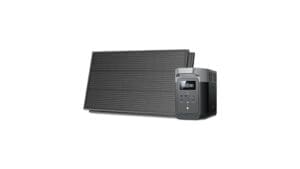
You’ll get a compact, TSA‑friendly 89.6Wh LiFePO4 power station that reliably runs laptops, phones and small appliances up to 100W with two AC sockets, PD USB‑C, USB‑A and a 12V DC output. It recharges fast via 65W PD, supports solar and car charging, and uses a strong BMS for safety and long cycle life. It’s ideal for travel, photography and short off‑grid use; keep going to see real runtimes, limits and charging details.
Some Key Takeaways
- 28,000mAh LiFePO4 battery equals 89.6Wh, offering high cycle life and safer chemistry than typical Li-ion cells.
- Two 110V AC sockets support 100W continuous (200W surge), suitable for laptops, small appliances, and some CPAP units.
- Ports include 100W USB‑C PD, 30W PD, two 18W QC3.0 USB‑A, and a 12V/5A DC output for versatile device charging.
- Fast PD 65W input recharges the unit in about 1.5 hours; solar and car charging are supported for field use.
- Portable TSA‑friendly size (2.54 lb) with robust BMS, automatic shutdown, and durable casing for travel and emergency use.
What the Powerurus 28,000mAh Actually Offers: Specs and Real-World Outputs
Look to the spec sheet and you’ll see the Powerurus 28,000mAh is built to deliver versatile, travel-friendly power: 89.6Wh of LiFePO4 capacity, two 110V AC sockets rated 100W continuous (200W surge), a 100W USB‑C PD port plus a 30W PD and two 18W QC3.0 USB‑A ports, and a 12V/5A (60W) DC output with included cigarette‑lighter adapter. You get fast PD recharge, solar and car options, robust BMS protections, and TSA-appropriate size. That 3,000+ cycle grade A chemistry prioritizes battery longevity, letting you escape wall dependence. Consider portability tradeoffs: impressive power in a 2.54‑lb package, not a full home backup. This model is well suited for those who need reliable portable power for travel and emergency backup.
How Long It Runs Common Devices: Realistic Runtime Examples and Limits
Now that you know the Powerurus packs 89.6Wh of LiFePO4 capacity and a 100W continuous AC output, let’s quantify what that actually means for everyday devices. You’ll run a 50W laptop ~1.6–1.7 hours, a 10W phone charger ~8–9 hours, a 30W projector ~2.8–3 hours, or a 60W CPAP ~1.3–1.4 hours. Small fans, LED lights, and radios extend longer; mini fridges may cycle but check appliance compatibility and starting surge limits. Expect real-world runtimes slightly lower due to inverter losses and long-term battery degradation. Use these numbers to plan realistic freedom on the move. The choice of power monitor can help you track battery capacity and real-time draw to better predict those runtimes.
Charging, Recharge Times, and Portable Solar/Car Options
Because Powerurus gives you multiple fast-charge paths, you can tailor recharges to how you're traveling: plug into the PD 65W Type-C input and get a full recharge in roughly 1.5 hours, top off from a car 12V socket when driving, or trickle in solar via the DC 5521 port (11–26V, 3A max) with a compatible panel. You’ll appreciate the fast recharge when you’re mobile; PD 65W cuts downtime sharply. Car charging is practical for road trips, and solar compatibility opens off-grid freedom. Note input limitations: methods aren’t simultaneous, and solar requires proper panel voltage/current matching for reliable charging. This makes it a solid choice for anyone building a multi-device charging setup on the go.
Safety, Build Quality, and Everyday Usability (Size, Weight, Lights, Buttons)
While the Powerurus packs robust LiFePO4 cells and a thorough BMS to protect against over‑voltage, over‑current, over‑temperature, over‑charge, over‑discharge and short‑circuits, its real-world safety is reinforced by automatic shutdown behavior that prevents damage to both the unit and connected devices. You’ll appreciate the durable casing and solid fit that shrug off knocks during travel. The button layout is clear: separate AC and DC controls reduce user error. At 2.54 lbs and compact dimensions, carry comfort is excellent for freedom seekers. Built-in LED modes provide useful illumination and status indication without draining much capacity. It also pairs well with common portable power accessories for camping and emergency backup.
Who Should Buy It : Ideal Use Cases and How It Compares to Alternatives
If you need a compact, travel‑friendly power station that reliably runs laptops, small appliances and CPAP machines up to 100W, the Powerurus 28,000mAh is a strong choice thanks to its LiFePO4 cells, robust BMS, and multiple high‑power ports. You’ll want this if you value mobility and independence: it's ideal for outdoor photographers powering cameras, drones and lights all day, frequent flyers needing TSA‑friendly backup, and anyone building sensible emergency preparedness kits. Compared with heavier 500Wh stations it's more portable but limited to sub‑100W loads; against tiny power banks it offers far greater UPS‑style reliability and cycle life. It's also a great match for those who use portable power regularly and want compatible solar generator gear to build a complete system.
Some Questions Answered
Does It Support Passthrough Charging While Powering Devices?
Yes — you can use pass through capability to power devices while recharging, but note the recharging methods aren’t usable simultaneously. You’ll get simultaneous charging and output via the PD 65W input (or car/solar) while the unit supplies its AC and USB outputs, and the BMS manages load to prevent damage. You’ll rely on the 100W AC limit and surge specs, so plan device draw to avoid overloads and automatic shutdown.
Can the Battery Be Replaced or Serviced by Users?
No — you can't user replaceable cells; the unit isn't designed for field cell swaps. If the battery degrades or fails, you should seek professional refurbishment options or authorized service to preserve safety and warranty. You’ll retain more freedom and lower risk by using certified technicians for LiFePO4 pack repair or replacement, since DIY servicing risks BMS damage, voided warranty, and safety hazards like shorting or thermal events.
Is There an App or Bluetooth Monitoring Feature?
No — there’s no app integration or Bluetooth diagnostics for remote monitoring. You’ll rely on the unit’s front-panel indicators and buttons to check battery level, outputs, and status. That keeps the system simple and private, avoiding wireless dependencies. If you want real-time phone-based telemetry and remote control, you’ll need a different model that includes app integration and Bluetooth diagnostics; this unit prioritizes straightforward, offline reliability instead.
Are There Regional Plug Adapters Available or Supported?
No, there aren’t built‑in international adapters included, but you can use external international adapters and travel compatibility kits with the unit’s AC sockets and DC ports. You’ll want compact, quality international adapters that handle 110V and the device’s 100W limit, plus appropriate plug converters for USB and 12V outputs. That keeps your freedom to travel while protecting the unit with proper voltage and plug compatibility.
Does It Ship With Any Warranty or Customer Support Contact?
Yes — it ships with a warranty duration and support channels. You’ll get a manufacturer warranty (typically 12 months) covering defects; check your package for exact terms. Support channels include email, phone, and online ticketing through the vendor’s site; some sellers offer live chat or authorized service centers. Keep your receipt and serial number handy so you can assert your rights quickly and maintain operational freedom.