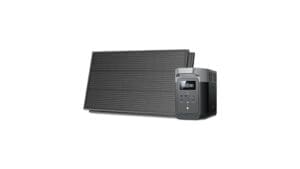
You’ll like the SinKeu 80000mAh portable power station if you want a lightweight, 256Wh LiFePO4 unit that reliably runs laptops, phones, lamps, small fans and compact fridges. It packs a 300W pure sine inverter, USB-C PD, USB-A, DC ports, and two AC outlets, plus fast AC, solar and car recharge options. Advanced BMS and thermal protection boost safety and long life. Keep going to see detailed runtimes, charge speeds and alternatives.
Some Key Takeaways
- 256Wh LiFePO4 pack (≈80,000mAh at 3.2V) offers long cycle life and enhanced safety compared to lithium‑ion.
- 300W pure sine wave inverter runs small appliances like laptops, mini-fridges, and fans, but not heavy loads.
- Multiple ports (USB-A, USB-C PD, two DC, two AC outlets) support simultaneous charging for travel and work.
- Fast recharging: AC charger ~3 hours, 60–100W solar ~5 hours, car ~6 hours, with PD and AC pass-through.
- Lightweight (6.5 lb) and durable with BMS protections and thermal throttling, ideal for camping and outages.
SinKeu 80000mAh at a Glance: Core Specs and What They Mean
Take a close look: the SinKeu portable power station packs a 256Wh LiFePO4 battery (about 80,000mAh at 3.2V) into a 6.5 lb package and delivers up to 300W of pure sine wave AC power, meaning you can run laptops, phones, lamps, fans, projectors, mini-fridges and other devices under 300W without worrying about waveform compatibility. You’ll appreciate the battery chemistry—LiFePO4 gives long life and safety. The port layout is practical: two AC, two USB-A, one USB-C PD, two DC outputs and a DC input. You’ll feel confident plugging gear in and sharing power with your crew. This unit is well suited for backup power situations and users who need portable, reliable energy.
Real-World Performance: Run Times for Laptops, Phones, Lamps, Fans, and Mini-Fridges
Now that you know the SinKeu’s specs and port layout, let’s look at what that 256Wh battery and 300W inverter actually deliver in everyday use. You’ll run a phone (10W) ~20–22 hours; a laptop (45W) ~4.5–5 hours; an LED lamp (8W) ~28–30 hours; a small fan (20W) ~12–13 hours. A compact mini-fridge (~40–60W cycling) will run about 4–6 hours depending on duty cycle. Expect slight battery heating under sustained high draw; the BMS manages temps. The unit stays quiet—minimal noise levels from internal cooling—so it’s comfortable for shared indoor or campsite use. This unit is well suited for those needing reliable backup for portable power and small appliances.
Charging, Ports, and Recharge Speeds: AC, Solar, and Car Charging Tested
Test the SinKeu’s charging options to see how quickly you can get back up and running: the included AC charger refills the 256Wh pack in about 3 hours, a 60–100W solar panel brings it up in roughly 5 hours under good sun, and a 12V car outlet takes around 6 hours. You’ll appreciate the two AC outlets, USB-A, USB-C PD, and dual DC ports for simultaneous charging. Fast charging via AC or PD keeps your devices moving; plan cable management around the eight ports to avoid tangles. Practical labeling and bundled cables help you share power confidently with friends. Portable power users often choose hubs that support multi device charging to streamline powering several gadgets at once.
Safety, Battery Life, and Durability: LiFePO4, BMS Features, and Cycle Expectations
After covering how quickly you can recharge and what ports you’ll use, it’s worth looking at what’s under the skin: the SinKeu uses LiFePO4 cells and an advanced BMS to give you long life and robust protection. You’ll appreciate LiFePO4 safety—stable chemistry resists thermal runaway and keeps capacity over thousands of cycles. The BMS enforces over/under voltage, current limits, and temperature management; it’ll trigger thermal throttling to protect the pack if heat builds. Expect durability: SinKeu rates over 3,500 cycles, low maintenance, and predictable degradation so your group can rely on it for years. This makes it a strong option when choosing the best lithium battery generator for reliable portable or backup power.
Who Should Buy It and Alternatives Under 300W Power Limit
If you need a lightweight, highly durable backup for camping, road trips, or home-office outages that won’t run heavy appliances, the SinKeu is a practical choice—its 256Wh LiFePO4 pack, 300W pure sine AC output, and low 6.5 lb weight make it ideal for powering laptops, phones, cameras, lights, small fans, and mini-projectors. You should buy it if you value backpacking suitability, frequent travel, or structured emergency preparedness without hauling heavy gear. Alternatives under 300W include the Jackery Explorer 300, EcoFlow River 370, and Bluetti EB3A—compare ports, recharge speed, cycle life, and user support to fit your group. It’s also a smart pick for users who prefer gear from sellers focused on portable solar generator accessories and backup power solutions.
Some Questions Answered
Can This Power Station Jump-Start a Car?
No — you can’t jump start a car with this unit. Its jump start capacity is absent: the station’s outputs focus on household and USB devices and won’t supply the high cold cranking amps cars need. You’ll use it for laptops, lights, fans, and small appliances under 300W. If you want vehicle starting, get a dedicated jump starter rated for sufficient cold cranking amps and follow safety procedures.
Is the Unit Safe for Overnight Indoor Use Near Bedrooms?
Yes — you can use it overnight indoors near bedrooms if you follow precautions. You’ll rely on LiFePO4 chemistry and an advanced BMS, which minimizes battery off gassing and thermal risk. Place the unit on a hard surface, keep vents clear, avoid flammable materials, and recharge every few months. If you worry about sleep disturbance, set it farther from beds to reduce fan noise and indicator lights so everyone feels secure.
Does It Support Passthrough Charging While Powering AC Loads?
Yes — you can passthrough charge while powering AC loads. You’ll use load sharing between the charger and battery cycling so the station supplies devices and recharges simultaneously. Expect AC activation behavior (brief red triangle) and follow limits: total AC load must stay under 300W. You’ll want to monitor temperatures and cycle counts over time, and recharge regularly to preserve LiFePO4 health. Reach out to support for any unusual behavior.
What Warranty Duration and Coverage Does the Product Include?
The warranty length is typically 12 months, and coverage details usually include defects in materials and workmanship under normal use. You’ll get repair or replacement service through the vendor’s customer support; shipping or accidental damage may not be covered. Keep your receipt and serial number, follow maintenance tips, and contact customer service for claims. If you want extended protection, ask about available warranty extensions or retailer programs before buying.
Are Replacement Batteries or Service Parts Available Locally?
Yes — you can usually get replacement batteries or service parts through the vendor’s authorized local retailers or by contacting customer service for authorized repair centers. You’ll want to confirm LiFePO4 cell availability and authorized installation to keep your warranty intact. When replacing, ask about battery recycling options and local recycling drop-offs. Share details with other owners so you all can locate trusted service partners and support each other responsibly.