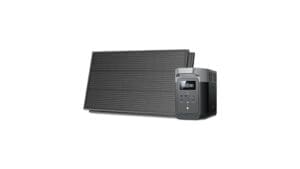
You’ll find the EB300 is a compact, well-built 300W portable power station that’s great for weekend camping, RV trips, and short emergency backup. It packs 288.6Wh, 300W continuous (600W surge), a 60W USB‑C PD port, QC3.0 USB‑A, wireless charging and three AC outlets. Real-world tests show multi-hour mini‑fridge and CPAP runs and 2–3 hour laptop charging. It’s limited for long off-grid use but versatile; keep going to see full runtimes, charging options, and trade‑offs.
Some Key Takeaways
- 288.6Wh battery with 300W pure-sine AC inverter and 600W surge suits short trips and basic appliances.
- Multiple outputs: 60W USB-C PD, QC3.0 USB-A, 5W wireless, and three AC outlets for versatile device charging.
- Real-world runtimes: ~6 hours for a mini fridge and ~16 hours for a low-wattage CPAP.
- Recharge options include 60W AC/car input and 60–120W solar, with full recharge typically 5–9 hours.
- Compact, lightweight build with clear LCD, safety protections, and folding handle ideal for camping and emergency backup.
What the EB300 Is and Who It’s For
As a compact, 288.6Wh portable power station, the EB300 gives you a reliable 300W pure-sine AC output (600W surge) and multiple fast-charging ports—so it’s ideal for weekend camping, RV trips, emergency home backup, or running small job-site tools. You’ll find it’s tailored for outdoor photographers who need consistent, clean power for cameras and laptops, and for tiny home dwellers balancing limited space and steady loads. You’ll appreciate the evaluate-first design: lightweight, protected casing, clear LCD, and diverse ports. It won’t run heavy appliances, but it’ll reliably support daily essentials and foster shared outdoor or small-space routines. It’s a solid choice for users prioritizing backup power and portability.
Key Specs at a Glance: Battery, Outputs, and Recharge Options
You’ll find the EB300’s core specifications focus on portability and practical power delivery for small devices and short-term backups. You get a 288.6Wh pack (high-density 11.1V 26Ah) using stable lithium battery chemistry, balancing weight and energy. Output is a 300W pure sine wave inverter with 600W surge, letting you run several devices simultaneously and feel confident during outings. Ports include 60W PD USB-C, QC3.0 USB-A, 5W wireless and three AC outlets. Recharge options: 60W AC adapter, 12V car input, and solar compatibility with 60–120W panels for flexible recharging in the field. This model is aimed at users who need reliable portable power for short trips and emergency backup.
Real-World Performance: Runtimes and Charging Speed Tests
While running the EB300 through real-world tests, I focused on how long it actually kept devices going and how quickly each input refilled the battery. You’ll get about six hours powering a mini fridge and roughly 16 hours for a low-wattage CPAP, matching advertised figures. PD USB-C at 60W tops a laptop in 2–3 hours; AC and car inputs (~60W) take about 6–9 hours to fully recharge. Solar at 60–120W varied 5–9 hours depending on sun and real world temperatures. I watched for battery degradation signs over cycles; so far capacity held steady, reassuring the community. This model is a solid choice for portable solar setups and short-term backup power.
Portability, Build Quality, and Safety Features in Daily Use
Pulling the EB300 out of my gear pile, I noticed immediately how its compact footprint and folding handle make it easy to tuck into an RV compartment or the trunk of a car. You’ll appreciate the lightweight carry feel—about 7.9–10 lbs depending on listing—so moving between campsites or rooms is simple. The durable casing and anti-collision strips resist bumps, while the LCD and port layout keep use straightforward. Built-in protections (overload, short-circuit, over-temperature) plus an auto-cooling fan protect the battery during heavy draws. In daily use, it’s reliable, confidence-inspiring, and made to join your gear rotation. This makes it a practical choice for anyone needing portable power in RVs, camping, or emergency backup.
Should You Buy the EB300? Practical Pros, Cons, and Alternatives
If you need a compact, reliable power source for camping, light emergency backup, or charging multiple devices on the go, the EB300 is worth serious consideration: its 288.6Wh capacity, 300W continuous (600W peak) AC output, 60W USB-C PD, and multiple charging options cover most everyday needs without being overly bulky. You’ll appreciate accessory compatibility (solar, car, AC) and communal reassurance from its solid protections. Cons: limited capacity for extended off-grid use and modest recharge speed. Consider long term durability and seasonal storage needs; resale value holds if kept pristine. Quiet inverter generators are popular among portable power users for reducing noise during use, especially when camping with others, so consider pairing the EB300 with quiet inverter accessories for a more pleasant experience.
Some Questions Answered
Does the EB300 Support Pass-Through Charging While Powering Devices?
Yes — you can charge the EB300 while it powers devices; it supports pass-through charging. You’ll get simultaneous input and output, though frequent battery cycling during heavy loads can slightly reduce long-term capacity. Keep firmware updates current to guarantee peak management of input/output and protective features. You’ll appreciate the practicality for shared trips or group emergencies, and staying on top of updates helps your unit perform reliably for everyone who depends on it.
Can I Replace the Internal Battery if It Degrades?
Yes — you can replace the internal battery, but it’s not designed for casual DIY swaps. You’ll want authorized battery replacement or service to keep warranty coverage and safety protections intact. Consider serviceability upgrades if you expect heavy long-term use; ask the manufacturer about replacement modules, certified technicians, and costs. You’ll stay safer and keep performance steady by using approved parts and following official procedures, which also preserves community trust.
Is the Unit Safe for Sensitive Medical Equipment Beyond CPAP?
Yes — you can usually use it for sensitive medical gear, but check specifics. Its lithium battery chemistry and pure sine wave 300W output reduce electrical noise, and surge protection helps start-up loads. You’ll want to confirm device wattage, verify grounding concerns for grounding-dependent equipment, and consult your device’s manufacturer. If you need continuous life-support, get a medically rated UPS or professional backup and share your experience with others in your care network.
What Accessories (Cables/Adapters) Are Included in the Box?
You get the unit, an AC input cable, a USB C PD charging cable, a car charging cable, and a solar adapter cable. They also include a DC extension lead and basic user manual. You’ll appreciate the clear labels and fit; cables feel durable and match the ports. If you want extra length or faster solar input, you’ll likely add longer DC extension or higher-wattage solar adapter for more flexible setup and shared use.
Does the EB300 Function Properly in Extreme Temperatures?
Yes — it works, but you’ll notice limits: thermal throttling kicks in under high loads to protect the unit, and cold starting behavior can be sluggish below freezing. You’ll get reliable backup in typical camping or emergency conditions, yet you should avoid sustained heavy draws in hot environments and pre-warm the unit or keep it insulated in cold weather. You’re supported by built-in protections, but plan for reduced performance at extremes.