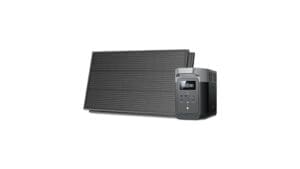
You’ll get a compact 1,024Wh LiFePO4 power station that’s light for its class at about 27 lb and pushes a clean 1,800W AC output. It tops 0–80% in roughly 50 minutes, supports 500W solar, and runs a 500W load for about two hours. Built-in BMS and a five-year warranty mean safer, longer life than typical NMC packs. It’s great for home backup, RVs, and camping—keep going to see detailed performance and comparisons.
Some Key Takeaways
- The DELTA 2 delivers 1,024Wh usable LiFePO4 capacity in a compact 27 lb package with 3,000+ cycle longevity.
- It features a 1,800W AC inverter, 15 outlets, and a 100W USB-C for running multiple high-draw devices simultaneously.
- Fast AC charging replenishes 0–80% in ~50 minutes and 0–100% in ~80 minutes, plus 500W solar input for daytime top-ups.
- Real-world performance: ~1,000Wh powers a 500W load for about two hours, with stable concurrent outputs and temperature-dependent sustained draw.
- Strong safety and support: built-in BMS, LiFePO4 chemistry, auto-regulation, and a five-year warranty for reliable backup and mobile use.
DELTA 2 At a Glance: Specs, Capacity, and Standout Features
Packed with LFP chemistry and fast charging, the EcoFlow DELTA 2 gives you a compact, 1024Wh portable power hub that punches well above its 27 lb frame. You’ll appreciate LiFePO4 battery chemistry for longevity — 3000+ cycles — and the BMS that protects cells during heavy use. With 1800W AC, 100W USB-C, and expansion up to 3 kWh, it beats many similarly sized rivals on usable capacity. It’s designed for home backup, RVs, and group trips where you want reliable sharing. EcoFlow’s five-year warranty length signals confidence; that reassurance helps you feel part of a dependable user community. The DELTA 2 is a top pick for those shopping for portable solar generator gear.
Real-World Performance: Charging Speed, Outputs, and Runtime Expectations
When you actually use the DELTA 2, its fast charging and strong outputs change how you plan power for trips or outages: it reaches 0–80% in about 50 minutes and 0–100% in ~80 minutes via AC, supports up to 500W solar input for sensible daytime top-ups, and its 1800W AC plus 100W USB-C let you run most kitchen gadgets, power tools, and laptops simultaneously without throttling. In real world runtime tests you’ll see heftier loads drain predictably—expect ~1,000Wh to run a 500W load ~2 hours. Concurrent outputs stay stable; monitor temperature effects under sustained high draw. This makes the DELTA 2 a solid option for those choosing backup power with portable power stations in mind.
Portability and Setup: Size, Weight, Outlets, and Expandability Options
At roughly 27 pounds and a compact 15.7 x 8.3 x 11.3 inches, the DELTA 2 balances portability with power—you can toss it in an SUV or stash it in a closet without sacrificing output. You’ll appreciate the sturdy carry handle for single-person moves; it’s lighter than many 1kWh rivals yet feels solid. Setup tips: place it level, connect AC or solar, and organize cords using its outlets—15 total give you flexibility for laptops, fridges, and tools. Expandability is straightforward: add 1–3 kWh external batteries to scale capacity. It’s designed for teams and travelers who want reliable, shareable power. For users who rely on portable or backup power, choosing the right charging hub and accessories can maximize the DELTA 2’s usefulness, especially when paired with multi device charging options.
Safety, Lifespan, and Reliability: LiFePO4 Battery, BMS, and Warranty
You’ve seen how portable and expandable the DELTA 2 is; now look at what’s under the hood: a 1024Wh LiFePO4 pack paired with a smart BMS and a 5-year support promise. You’ll appreciate LiFePO4 longevity — rated for 3,000+ cycles — which beats typical NMC packs for steady capacity retention. The BMS actively balances cells, limits temperature, and auto-regulates charge/discharge, so you get predictable performance and safer operation during heavy loads or solar input. Warranty coverage for five years adds community-level confidence: you’re not just buying hardware, you’re joining a supported owner base that expects reliability. The company’s focus on portable power makes it a solid option for users needing reliable backup and mobile energy.
Who Should Buy It (And Who Shouldn’t): Ideal Use Cases and Buying Decision Checklist
Because the DELTA 2 blends high-capacity LiFePO4 chemistry, fast charging, and multiple output options, it’s a strong pick for anyone needing reliable, quiet backup or portable power without the maintenance of gas generators. You should buy it if you want a compact 1024Wh hub for home backup, RVs, or as camping essentials that support 1800W loads and rapid recharge. Skip it if you need ultra-lightweight day-hike gear or budget options under $500. Use the checklist: assess wattage needs, portability (27 lbs), solar plans (500W max), expandability to 1–3 kWh, and long term storage requirements. It’s also well-suited for buyers who prefer portable power stations over traditional fuel-based generators.
Some Questions Answered
Can I Use the DELTA 2 as an Uninterruptible Power Supply (UPS) for PCS?
Yes — you can use it as a UPS for PCs, and you’ll get fast switchover with reliable power. You’ll appreciate the long battery lifespan (LiFePO4 = 3000+ cycles) and quiet operation compared to gas generators. Note it’s not a full UPS replacement for enterprise servers: check device surge protection needs and power draw against the 1800W limit. You’ll fit right in with other tech-savvy users who value dependable, portable backup.
Is the Unit Airplane-Transportable Under Lithium Battery Regulations?
No — you can’t fly with it in carry-on or checked baggage under typical airline restrictions because its 1024Wh LiFePO4 exceeds allowed limits. You’ll need to check specific carrier policies; some airlines permit up to 100Wh or require airline approval for 100–300Wh. Prepare battery documentation, spec sheet, and proof of capacity if you ask for an exception. You’ll feel supported by contacting the airline and comparing their rules before travel.
Are Replacement Batteries or Repair Parts Available Separately?
Yes — you can get battery replacements and repair services through EcoFlow and authorized partners; they sell add-on batteries for expanded capacity and offer official repair support. You’ll want to compare costs and warranty coverage versus third-party options, since OEM parts and service keep performance and safety at their best. Join EcoFlow communities for tips, vendor comparisons, and trusted service centers so you’ll feel supported when choosing replacements or repairs.
Does It Support Pass-Through Charging While Powering Heavy Loads?
Yes — it supports pass through capability, so you can charge the unit while powering devices. You’ll want to mind heavy loads: under sustained high draw the unit can trigger thermal throttling to protect the battery and reduce output. Compared to gasoline generators, it’s cleaner and smarter, but don’t expect unlimited simultaneous full-power charging and max output. You’ll still get reliable backup power and community-minded support if issues arise.
Can Multiple DELTA 2 Units Be Linked for Parallel Operation?
Yes — you can link multiple Delta 2 units for parallel capability to increase output and capacity. You’ll pair them using EcoFlow’s parallel kit and follow the sync process; just make sure all units run the latest firmware updates so performance and safety features align. You’ll notice better surge handling and extended runtime compared to a single unit, and you’ll fit right into other users who prefer scalable, upgradeable portable power setups.